

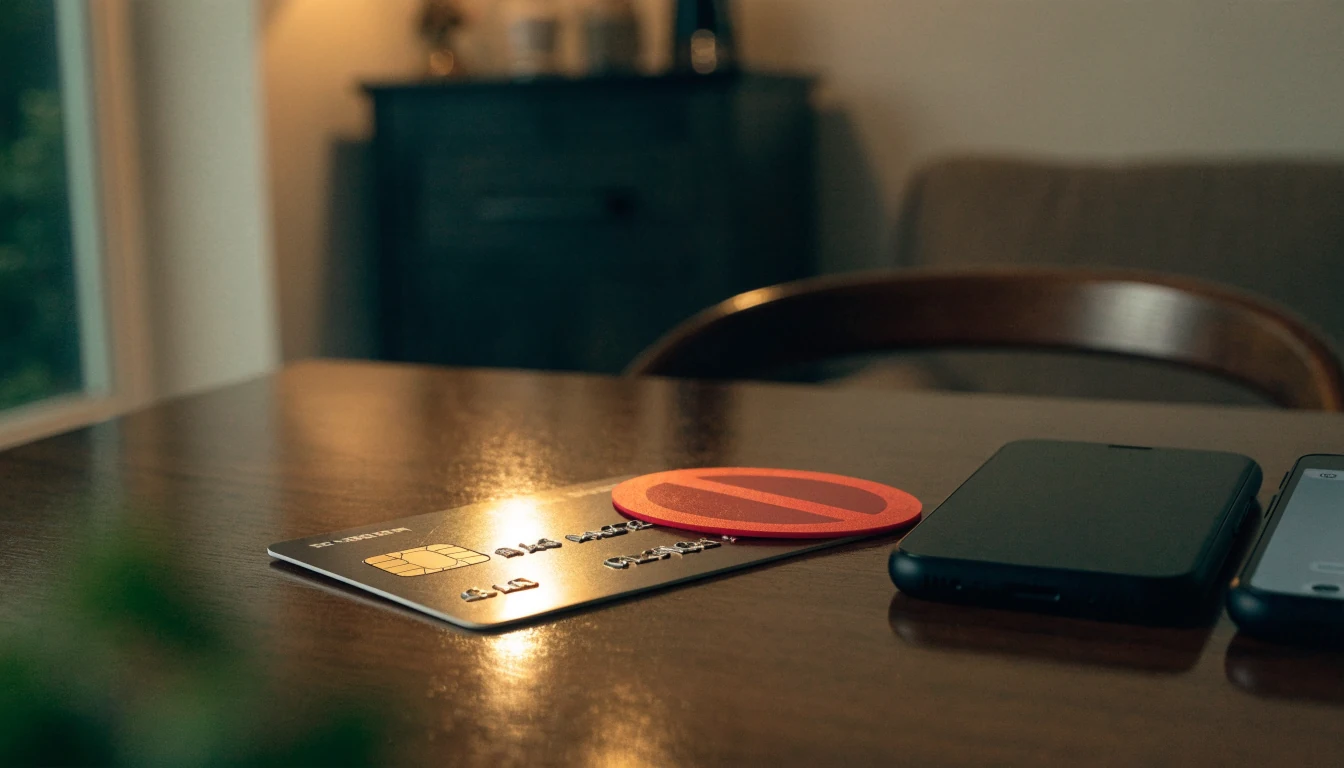
The payment network logo does not show whether a card is credit or debit, and UK-licensed casinos cannot take credit-card payments for gambling.
Can UK Casino Sites Accept Credit Cards in 2026?
No. A UK-licensed casino cannot accept a credit-card payment for gambling. A website that displays Visa or Mastercard does not thereby offer credit-card deposits: those card networks also handle debit cards, and the payment option must be understood in the context of the card product and the casino’s UK payment rules.
That distinction matters when you compare casino sites that appear to accept cards. A logo on a page or a general claim that “cards are accepted” is not proof that you can use a credit card to fund play. At a UK-licensed casino, credit-card payments for gambling are prohibited. The restriction remains in force in 2026.
Why a card logo can be misleading
Visa and Mastercard are payment networks, not a statement about whether a particular payment is credit or debit. A casino may accept a debit card carrying one of those logos while refusing a credit card on the same network. So a search for credit-card casino sites in the UK can lead to an apparent match that is only offering debit-card payments.
The relevant detail is the source of the funds, not the logo. If the payment would use credit, a UK-licensed casino must not accept it for gambling. A page that lists card brands without explaining the permitted card type is incomplete; check the wording in the cashier rather than treating the logo as permission.
The same principle applies if the payment is routed through a wallet or money service. Routing a credit-card-funded payment through another service does not make it acceptable for gambling. Remote gambling licensees cannot accept credit-card payments for gambling through those channels either. A different route is not a different rule.
Casinos That Accept Wirecard in the UK: What to Check
What “credit card casinos in the UK” can mean
The phrase can describe two very different things. It may refer to a UK-licensed casino that accepts debit cards, or to a site claiming to accept credit cards for gambling. The first can be consistent with UK rules; the second should not be treated as a lawful UK-licensed option.
A casino serving customers in Great Britain must hold the relevant Gambling Commission licence. The licence status matters because the credit-card restriction is part of the rules for regulated gambling in this market. A site’s own description does not override those requirements, and a payment claim does not establish that the operator is licensed to serve UK customers.
You may also see claims about a credit-card casino “not on Gamstop”. That wording does not create an exception to the payment restriction. A site outside the UK regulatory system is not a UK-licensed casino, and its willingness to advertise a payment route does not make that route permissible for a regulated UK operator. Do not treat an overseas site’s claim as evidence that UK rules have changed.
What to take from “cards accepted”
When a site says it accepts cards, separate three questions:
| What you see | What it tells you |
|---|---|
| A Visa or Mastercard logo | The network is named; the logo alone does not identify the card product accepted. |
| A debit-card option in the cashier | Debit-card use may be available, subject to the casino’s terms and your account. |
| A claim that credit cards can fund gambling | It does not make credit-card gambling acceptable at a UK-licensed casino. |
This is why a list of “best credit-card casinos in the UK” would be misleading if it presented UK-licensed operators as accepting credit-card gambling. The useful comparison is not which licensed casino takes credit cards; none can offer that as a gambling payment. The meaningful distinction is between a card network and a credit card, and between a UK-licensed operator and a site outside that regulatory framework.
If you are looking for a way to pay at a UK-licensed casino, treat credit cards as unavailable for gambling and assess permitted payment methods separately. The alternatives differ in how they work, and a site’s cashier is the place to see what it accepts for your account. That is a payment-method comparison, not a loophole in the credit-card rule.
The direct answer, then, is no: UK casinos that are properly licensed cannot accept credit cards for gambling deposits. A card logo is not a workaround, and changing the route through a payment service does not turn credit into an allowed gambling payment. Check what the cashier actually identifies before you make a decision. Logos are not permission.
UK Credit Cards
UK-licensed casinos are prohibited from accepting credit-card payments for gambling, including those routed through wallets or other payment services.
Top online casinos in the UK
- WinBeastBonus: €5000 + 500 FS + €650 Freebet · Payout speed: 1-3 business days
- AmunbetBonus: Join now and get 450% up to 2,700 GBP + 450 FS · Payout speed: 1-3 business days
- ZombillionBonus: Welcome Pack 250% up to £4000 + 200 FS · Payout speed: 1-3 business days
- DieselwinBonus: Welcome Pack 250% up to £4000 + 200 FS · Payout speed: 1-3 business days
- NightWinBonus: £900 + 400 free spins · Payout speed: 1-3 business days
- SlotoSportBonus: 500% up to £ 10 200+ 777 FS · Payout speed: 1-3 business days
Which Payment Methods Can You Use Instead?
For a UK-licensed casino, the practical comparison is between eligible alternatives—not different ways to use a credit card. Debit cards are the closest substitute if you want to pay directly from a bank account. Other options trade that familiar card process for wallet convenience or a prepaid, deposit-only route.
| Method | Main practical advantage | Point to check |
|---|---|---|
| Debit card | Familiar card payment; Visa and Mastercard are commonly accepted | It must be a debit card, not a credit card |
| PayPal | A separate wallet option noted for speed and convenience | A casino may exclude it from bonus eligibility |
| Skrill or Neteller | E-wallet alternatives available at some sites | Promotions may not apply to deposits made with them |
| Paysafecard | Prepaid voucher that does not require a card payment at the cashier | Deposit-only; it is not a withdrawal route |
Debit cards: the nearest card alternative
UK casinos commonly accept debit cards bearing the Visa or Mastercard brand. The key distinction is how the card is funded: a debit card draws on money in your bank account, while credit-card payments for gambling are not accepted by UK-licensed casinos. The logo alone does not tell you which kind of card you have.
If you prefer to use a card rather than set up a separate wallet, debit is therefore the most direct alternative. It keeps the payment method familiar, but does not make every card interchangeable. Issuer rules and the casino’s cashier determine whether a particular card can be used.
Wallets: convenience, with promotion conditions
PayPal is presented in a specialist casino review as a popular option for speed and convenience. That same kind of review cautions that PayPal may not qualify for a casino bonus. Treat both points as a prompt to compare the specific operator’s terms, not as a guarantee that every UK casino supports PayPal or excludes it from every promotion.
Skrill and Neteller are offered by some sites. A specialist casino review reports that these wallets are often excluded from promotions, so check the terms before choosing one if bonus eligibility matters to you. The useful comparison is not simply “wallet or card”: it is whether the payment route you want also meets the conditions attached to the offer.
Wallets can be convenient when you already use them, but they add another account to the payment process. If you would rather keep things straightforward, a debit card may be the simpler fit. If promotional eligibility is your priority, read the offer’s payment-method exclusions before depositing. Small print, large consequences.
Do
- Use a debit card for direct bank funding
- Verify if a wallet is eligible for bonuses
- Check the cashier for current method availability
Don’t
- Use a credit card for gambling deposits
- Route credit funds through a third-party service
- Assume all card logos permit credit use
Paysafecard: prepaid and deposit-only
Paysafecard works differently from a debit card or wallet. It is a prepaid voucher for deposits only, making it an option when you want to pay from a voucher balance rather than enter card details. Its main limitation is built into the method: it cannot serve as a withdrawal route.
That distinction matters when comparing methods. A deposit-only option may suit you if the priority is paying in, but it is not a complete payment route for managing money in both directions. Consider that before selecting it at the cashier.
Which one fits your priority?
Choose by the feature that matters most to you:
- A familiar card payment: look for a debit card, including Visa or Mastercard.
- Wallet convenience: consider PayPal, Skrill or Neteller, while checking the casino’s current terms and promotion rules.
- A prepaid deposit: Paysafecard is the deposit-only choice.
There is no single winner for every player. Debit cards are the closest card-based alternative; wallets may suit you if convenience is the deciding factor; and Paysafecard is specific to deposits. Check the cashier and any promotion conditions before deciding, rather than assuming that a method accepted for payment is also eligible for an offer.
What Happens Between a Deposit and a Withdrawal?
A deposit and a withdrawal are separate stages, even when you use the same payment method for both. The deposit moves money into your casino balance; a withdrawal request starts a process that can involve the casino’s approval, account checks and the payment provider’s own handling. A quick deposit is not a promise of a quick payout.
Casinos That Accept Echecks in the UK: What to Check
The route back can also be narrower than the route in. UK anti-money laundering rules commonly require a payout to return to the original payment source. This is known as a closed-loop approach: the casino checks where the funds came from and directs the withdrawal back there where possible. If that route cannot be used, an alternative may need to be approved and verified before payment can proceed.
| Stage | What can affect it |
|---|---|
| Deposit | The payment method and its processing |
| Casino review | Approval of the withdrawal request and account checks |
| Payment delivery | The provider’s handling, cut-off times, weekends and currency conversion |
The table separates the steps; it does not set a fixed timetable. A card payment may appear in your balance straight away, while a payout can take several business days. A specialist payment review describes this difference between deposit and withdrawal speeds; the exact timing depends on the casino and payment route, so check the cashier’s stated processing information rather than treating deposit speed as a guide.
Before a casino releases a withdrawal, it may need to complete its internal approval. That stage can take longer on a first payout if the account is not fully verified. KYC checks are part of that process: the casino may need to confirm your identity and payment details before authorising the funds. If a check is outstanding, the request may remain under review even though the deposit arrived without delay.
After approval, the payment provider still has to deliver the money. For a bank transfer, the timing can be affected by when the transfer is sent, weekends and any currency conversion. If the casino account or payment route uses a different currency from your bank account, conversion may add another step and affect the amount received. A specialist payment review highlights these factors as reasons bank-transfer delivery can vary. The casino’s processing estimate and the bank’s delivery time are not necessarily the same clock.
When you request a payout, check which withdrawal route the casino offers for the payment method you used. A method shown for deposits is not automatically available for withdrawals, and the original-source requirement may determine where the funds can go. If the cashier requests another route, follow its instructions and complete any additional verification it requires before expecting the payment to be sent.
KYC Verification
First-time payouts may take longer as the casino must complete identity and payment detail checks before authorising funds.
For an online casino credit card search, one distinction matters: a payment card label does not tell you whether a card-funded gambling deposit is allowed. Remote gambling licensees cannot accept credit-card payments for gambling, including payments routed through a money service business. A fast card deposit therefore should not be read as evidence that a credit card can fund play. The timing question begins only after an eligible payment route has been used.
Keep the casino’s approval time separate from the provider’s delivery time when checking a delayed withdrawal. Look for the request status in your account, check whether KYC is complete, and confirm the destination shown for the payout. Those details identify which stage is pending. An instant deposit does not make an instant withdrawal.
Can You Use a Credit Card to Gamble Online in the UK?
No. A UK-licensed online casino cannot accept a credit-card payment to fund gambling. That applies whether you are depositing to play table games, betting on another casino game or adding money for online play more generally. The payment being made through a website rather than in person does not make credit-card funding permissible.
The restriction concerns the source of money used for gambling, not merely the label shown beside a button in a cashier. If a casino displays a familiar card brand, that does not mean every card bearing that logo can be used for a gambling deposit. Debit cards and credit cards are different products, even when they carry the same brand. A listed payment option is not permission to use borrowed credit for gambling.
Casino sites that accept Jeton in the UK
The rule also covers attempts to route a credit-card payment through a money service business. In other words, using an intermediary does not make the underlying funds acceptable if the payment is still credit-card funded. The same principle applies to a digital wallet when it allows credit-card funds to be used for gambling: a wallet is not a lawful workaround for a payment the operator cannot accept directly.
That distinction matters because the payment route can obscure where the funds originated. A casino or payment provider may decline a transaction if it identifies credit-card funding, and an operator must not accept a prohibited gambling payment simply because it arrived through an extra step. Changing the route does not change the source.
For you, the practical answer is straightforward: do not try to deposit with a credit card, directly or through an intermediary, at a UK-licensed casino. If you are unsure whether a card is debit or credit, check with the card issuer before attempting a payment. A failed deposit is not a reason to try another route that still relies on credit.
This is a restriction on credit-card payments for gambling, not a general statement that a credit card can never be used for any purchase connected with a casino business. The relevant question is whether the payment funds gambling. Where it does, the operator cannot accept it as a credit-card gambling payment.
The rule applies to remote gambling licensees serving the British market, including operators based outside the country that offer gambling to customers here. A casino’s location does not remove its licensing obligations when it serves that market. Likewise, a site’s willingness to display a payment option would not override the restriction.
Offshore Sites
Do not treat the payment processes of offshore casinos as evidence that credit-card gambling is permitted for UK-licensed operators.
Do not treat an offshore site’s payment process as evidence that credit-card gambling is permitted in the UK. Offshore casinos sit outside the UK Gambling Commission’s regulatory system; a payment being technically possible there is not the same as being allowed at a UK-licensed casino. For legal online gambling in the UK, the operator must hold the relevant UK licence, and the credit-card restriction still applies.
So if you are deciding whether to use a credit card for an online casino deposit, the answer is no. Neither an online cashier nor a money service business changes that. The important distinction is the funding source—not how many steps sit between your card and the gambling account.
How to Check Whether a Payment Method Works for Your Account
A payment logo on a casino’s website is only a starting point. The cashier is where you check whether a method is currently offered to UK customers and whether your particular card product can be used. This distinction matters for Visa and Mastercard: a listed brand does not mean every card carrying that logo is eligible.
A specialist review lists Visa and Mastercard among the methods offered by the sites it covers. Treat that as an indication to verify, not a promise that the option will appear for your account. Availability can depend on the casino’s current cashier settings and the type of card you hold. Check the deposit screen after signing in, and read any conditions attached to the payment option.
UK Casino Sites That Accept EcoPayz: Payz Guide
Most importantly, a card brand being listed does not make credit-card payments for gambling permissible. UK-licensed casinos cannot accept credit cards for gambling. Check that the card you intend to use is a debit card, and do not try to route credit-card funds through a wallet or another payment service. A cashier that displays a card logo is not permission to use every product associated with it.
Check the currency before your first transaction
Confirm the account currency as well as the payment method. A specialist review states that GBP is supported on the pages it covers, but you should still check the currency shown in your own account before making a transaction. If the casino account and the payment route use different currencies, conversion may apply.
That can make the amount leaving your account differ from the amount credited to the casino balance. Check the currency displayed in the cashier and any conversion information shown before confirming. The useful comparison is not simply “card accepted” versus “card declined”; it is whether the method, your card product and the account currency all match your needs.
A quick compatibility check
Before depositing, confirm these points in the cashier:
- Is the method actually available after you sign in?
- Is your card a debit card rather than a credit card?
- Does the casino accept your specific card product, not just its brand?
- Is the account currency shown as GBP, or will a conversion be involved?
If the cashier does not make an answer clear, pause and contact the operator through its stated support channel rather than testing the payment with a deposit. A declined or unsuitable option is not a reason to try a different route for credit-card funds.
The same distinction applies if a site describes itself as “non-GamStop”. That label does not establish that the operator is authorised to serve UK customers or that credit-card funding is allowed. Remote gambling licensees serving Great Britain need the relevant UK Gambling Commission licence, and the credit-card restriction still applies. Check the operator’s licence on the Commission’s public register before depositing; a payment page cannot substitute for that check.
The cashier is the practical test of payment compatibility, while the card type and account currency determine whether the option suits your transaction. Logos are not guarantees.
When Did the UK Credit Card Gambling Ban Begin?
The UK credit card gambling ban took effect on 14 April 2020. From that date, credit-card payments could no longer be accepted for gambling by operators covered by the restriction. The rule remains in force; it has not been relaxed.
14 April 2020
The date the UK credit card gambling ban took effect, marking the point when remote gambling licensees could no longer accept credit-card payments for gambling.
That date matters because it marks the point when the restriction became an active rule, rather than a proposal or a future change. If you are checking whether a past payment or policy predates the ban, 14 April 2020 is the relevant dividing line. It is not a date that has since been superseded by a later relaxation.
The restriction is often described as a ban on credit cards for gambling, but its practical significance is more specific: remote gambling licensees cannot accept credit-card payments for gambling. The date therefore records a change in what operators may accept, not a change in whether gambling itself is permitted.
Why is the ban still relevant?
Because the rule has not been relaxed, its start date is historical but its effect is current. A reference to an older casino promotion, payment page or general guide does not establish that credit-card payments for gambling are permitted now. Material written before the ban may describe an earlier position and should not be treated as a guide to the present one.
The same caution applies when reading about payment cards in broad terms. A mention of card payments does not, on its own, tell you whether the material refers to credit or debit cards, or whether it reflects the rules in force after April 2020. The distinction matters: the ban concerns credit-card payments for gambling, and the start date helps you identify whether a statement belongs to the period before or after the restriction began.
Upaycard at UK Casinos: Acceptance and Payment Options
The answer to why credit cards were banned should not be reduced to an assumed explanation based only on the date. The confirmed point for a reader is the regulatory outcome: the ban began on 14 April 2020 and remains in place. The date establishes when the restriction took effect; it does not, by itself, supply a detailed account of the regulator’s reasoning.
What the date tells you
If a source says that a UK gambling operator accepted credit-card payments for gambling, check when that information applied. A claim about the period before 14 April 2020 may describe the earlier position, while the same claim presented as current conflicts with the continuing restriction. Historical information and present-day permission are not interchangeable.
There is no later change to mark as a new start date. The key point is continuity: the ban began on 14 April 2020 and has not been relaxed. That keeps the date useful for interpreting older material, while the continuing rule answers whether the restriction still applies.
A useful way to read the timeline is simple: before the start date, a source may describe the previous position; from that date onward, the restriction applies. A later publication date does not create an exception, and an old description does not update itself. Check the date and the claim separately. The rule remains in force.
Ban Continuity
- The credit card gambling ban began on 14 April 2020
- The restriction remains in force and has not been relaxed
- Historical material from before the ban date is not a guide to present rules
Deposit Limits: What to Check Before You Pay
A casino’s minimum deposit is the smallest amount it will accept through a particular payment route. A specialist review puts common starting points at £10–£20, but that is a reported range, not a promise for every account or method. Check the cashier before entering an amount: the minimum shown there is the one that applies to your attempted transaction.
That figure is not a suggested budget. UK remote gambling licensees must prompt new customers to set a financial limit before their first deposit and make account-level limit controls accessible. You can set a personal cap below the casino’s transaction maximum; the operator’s minimum does not mean you need to deposit more than you can afford to lose.
Check the maximum as well as the minimum
Maximum deposit limits can differ by payment method and account status. A casino may set one cap for a single transaction and separate limits across a day or month. Do not assume that a method allowing a small first payment will accept a larger one, or that limits shown for one account apply to yours.
Before confirming, look for:
- the minimum and maximum shown for the selected method;
- whether a displayed cap applies per payment, per day or per month;
- any account-level limit that would prevent the deposit;
- the amount and currency that will actually be charged.
If the cashier does not explain how a limit is measured, ask the operator before paying. Splitting a payment is not a reliable workaround: separate transactions can still count toward a daily or monthly cap.
Credit cards are not a deposit option
A search for a credit-card casino deposit may return pages that list card brands, but that does not make credit-card funding permissible for gambling at a UK-licensed casino. The limits described here concern payment methods the operator may lawfully accept for gambling; they do not create an exception for a credit card.
That distinction matters when comparing a casino’s advertised deposit range with what your account can actually use. A displayed card logo or maximum amount is not permission to fund gambling with credit. Check the selected method and amount in the cashier, and confirm that the operator holds a current UK Gambling Commission licence on the public register before depositing. A limit is only one part of the check.
Are Credit Cards Allowed at UK Online Casinos?
No. A UK-licensed online casino cannot accept a credit-card payment for gambling. If you are looking for a credit card casino in the UK, the key point is that a payment option being visible or mentioned on a website does not make credit-card gambling permitted.
The restriction concerns using credit to fund play, not simply whether a casino accepts card payments in general. A debit card and a credit card are different products: a casino may offer debit-card deposits, but that does not mean its customers can use a credit card for the same purpose. Check the payment option shown for your account rather than treating the word “card” as covering both.
The rule is still in force. It applies to UK-licensed casinos regardless of how their payment options are described, so a claim that a site accepts credit cards should not be taken as permission to use one for gambling. The distinction is straightforward: card payments may be available, but credit-card payments for gambling are not.
Deposit Compatibility
- Confirm the method is available after signing in
- Verify the card is a debit card, not credit
- Ensure the account currency is set to GBP
- Check the operator’s licence on the Gambling Commission register
For you, the practical answer is simple: do not try to fund casino play with a credit card. If a payment page or promotional description appears to suggest otherwise, pause and confirm what type of card is actually supported for a UK account. A listed card brand alone does not establish that a credit product can be used.
There is no grey area in the short answer: UK online casinos operating under a UK licence cannot accept credit cards for gambling. The restriction has not been relaxed.
Paying Safely: Keep the Deposit and Withdrawal Route Clear
A payment route is easier to manage when the casino account and the payment method belong to you. Matching the account details to the payment source reduces the chance that a basic ownership mismatch will hold up a transaction or prompt extra checks.
A straightforward approach is to use one payment account consistently for deposits and withdrawals, where the casino allows it. This creates a clear record of who supplied the funds and where any return should go. Using another person’s card or payment account can make that link less clear, even when you have permission to use it.
The casino may also return funds to the original payment source. This closed-loop approach is a common anti-fraud and anti-money-laundering control, rather than an arbitrary preference. If you ask to use a different route, the casino may require additional verification before processing it.
That does not make a credit card an option for gambling. UK-licensed casinos cannot accept credit-card payments for gambling, including payments routed through a money service business. A wallet cannot be used to get around the restriction if it allows credit-card funds to be used for gambling. The cleanest payment route is not a workaround.
Before making a payment, check that the account name and payment details are yours, and that the casino supports the intended route for your account. Keep records of the transaction and respond to any request for information through the casino’s official account process. If a payment is rejected, do not try to disguise its source by routing it through someone else.
Casinos That Accept Citadel in the UK: How to Check
For a casino payment by credit card in the UK, the answer is no: ownership checks do not change the rule. Use only a permitted method in your own name, and keep the deposit and return route clear. Simple, not clever.
Can You Play Online Slots with a Credit Card?
No. At a UK-licensed casino, you cannot use a credit card to fund online slot play. The restriction applies to gambling payments, not just to a particular game or payment screen. A credit-card payment routed through a money service business is not a workaround, and a wallet cannot be used if it lets credit-card funds reach gambling.
That leaves a clear distinction: you may be able to pay by another eligible method, but the source of the money matters. A debit card is not a credit card, though the casino’s cashier must show that it is available for your account. Check the payment terms before confirming a deposit; a logo on a page does not settle eligibility.
Slot rules are separate from payment rules. In Britain, online slots cannot offer autoplay, so you must start each spin yourself. Every spin must also last at least 2.5 seconds. These requirements apply even when your deposit comes from an allowed payment method. The game cannot speed past them.
The credit-card gambling ban has been in force since 14 April 2020 and has not been relaxed. For slot players, the practical answer is therefore straightforward: a credit card is not an acceptable way to bankroll spins at a UK-licensed casino. If a payment option appears to accept one, do not assume that this makes credit-funded gambling permitted.
Before playing, distinguish the card type and the funds behind any wallet payment. Then check the casino’s current cashier and terms for the permitted route. Payment labels can look similar; the funding source is what counts. No clever detour.
What is the fastest withdrawal method for UK casinos?
PayPal, open banking and debit cards linked to fast payout systems are generally among the quickest. Your account must be verified, and the casino’s approval process also affects how soon you receive the money.
Why can a fast payout casino still delay my withdrawal?
The casino must approve the withdrawal, and a first payout can take longer while your account is being verified. Using the same account details and payment route for deposits and withdrawals can help avoid basic ownership checks causing friction.
Can I deposit in GBP?
Yes, GBP is supported at the sites described. Check your account currency before your first transaction to avoid conversion costs.
What is the current minimum deposit?
The minimum usually starts at £10–£20, depending on the payment method.
Which method has the lowest fees?
There is no universally cheapest method. Compare the casino’s charges, provider or bank fees, currency-conversion spread and any network costs for the amount you plan to deposit.
Is Skrill available?
Yes, Skrill is available at some UK-friendly casino sites and is a common deposit method. Bonus eligibility may exclude Skrill deposits.
Material created by the team Jackpot City UK Guide